
Reference · revised 19 May 2026
The number on the sign is the limit. The table is only the background.
Published . Updated . Figures are the published defaults in kilometres per hour.
Permissible defaults
From the public table of the Road Traffic Act. A posted sign, a temporary board and a police instruction replace the cell. Category letters are the licence classes: A motorcycles, B cars, C trucks, D buses, and the E combinations that include a heavier trailer.
| Vehicle | Built-up area | Outside towns | Motorway | Express road |
|---|---|---|---|---|
| Category A, motorcycles | 50 | 80 | 100 | 90 |
| Category B, cars | 50 | 90 | 140 | 120 |
| Categories C and D, trucks and buses | 50 | 80 | 100 | 90 |
| BE, CE, DE, with a heavier trailer | 50 | 70 | 100 | 90 |
Tractors, mopeds and self-propelled machines have still lower defaults and are not allowed on every class of road. If that is your vehicle, read the Act rather than stretching this table.
How a limit is shown
A speed limit is a red circle with black numerals, the pattern drawn above. The end of a specific limit is the same circle crossed out, or a new circle with a different number. A national-speed end sign does not invent a higher number than your vehicle’s default. A motorcycle does not inherit 140 because a car may use it.
Built-up areas start and end with the place-name signs. Inside them, 50 is the background even when the street looks wide. Many towns then reduce that with a 40 or a 30, especially near schools. A residential zone, signed at its entries, is stricter still: pedestrians may use the whole width, parking is only where marked, and the speed is the low one that belongs to that zone. Follow the sign you passed, not a guess from the architecture.
Penalties for excess speed are banded. They can include a fine, penalty points and, at higher excesses, a period of disqualification. The schedule was long published in leva and sits inside the euro-era text now. This page does not reprint the bands, because a half-remembered leva figure is a bad companion. The Act has the table.
Which board wins
The public rules put the signals in order. An officer directing traffic overrides a traffic light. A light overrides a sign when they disagree about priority. A sign overrides a road marking. A sign on a portable stand in the carriageway overrides the permanent signs it conflicts with. Temporary markings in a work zone override the permanent paint.
That order is why a 60 on a yellow board in a contraflow is the limit, even if the last gantry you remember said 140 and the white paint still shows three lanes.

Green, blue, red
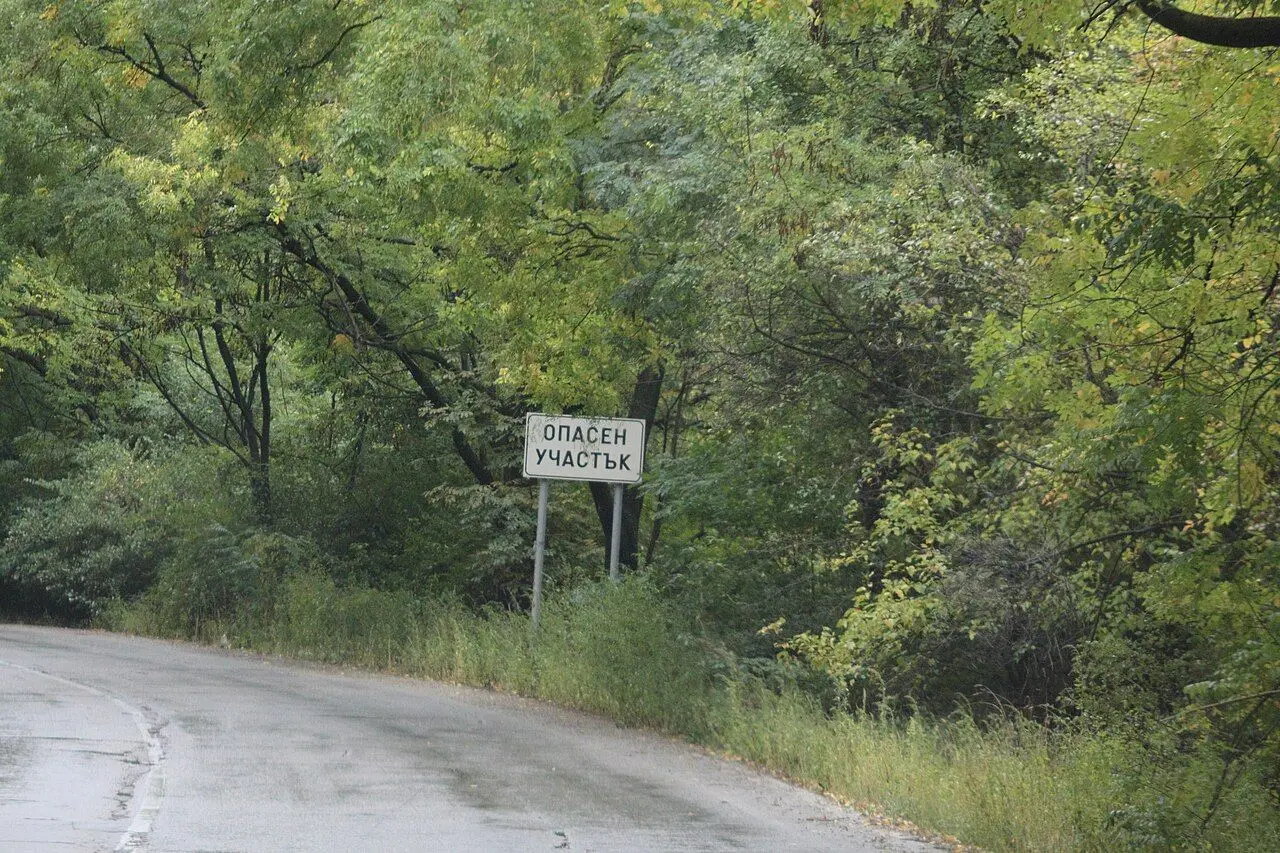
Colour is a language. These are the patterns a driver meets on the Bulgarian network, illustrated with simple diagrams on this page rather than copies of the official sign artwork.
Green direction signs
Motorway directions are carried on green signs: the route number, the destination, often the E-road. The Kapitan Andreevo photograph in the border guide is a green board for that border. Straight on along A6 toward Kalotina is signed in green as well.
Blue for the exit and the other road
Blue boards often mark the exit off the motorway or a destination on the ordinary network. On the Europe motorway photograph, Slivnitsa is signed in blue while Kalotina continues in green. Read the colour as “staying on” or “leaving”, then read the words.
Markings you will actually see
Lane lines are white. Arrows painted before a split, as on Trakia near Nova Zagora, tell you which lane survives. A yellow line in a foreign illustration is not the Bulgarian centre line. Do not import habits from a country that paints the centre yellow.
A yellow diamond means a priority road. The same diamond crossed out means you have left it. Give-way and stop signs behave as elsewhere in Europe: the triangle asks you to yield, the octagon asks you to stop. Roundabouts are signed, and the driver on the roundabout is not someone to educate.
Overtaking is on the left, after you have checked that you are not already being overtaken and that you can return without forcing the other vehicle to brake. Solid lines mean you stay in the lane. A heavy vehicle that cannot hold the speed of the road should be in the rightmost lane except while overtaking. That rule is in the freight context as well as here.
The English summary published for drivers visiting the EU is a readable companion to the Act. It is still a summary. When a sign and this page disagree, follow the sign.